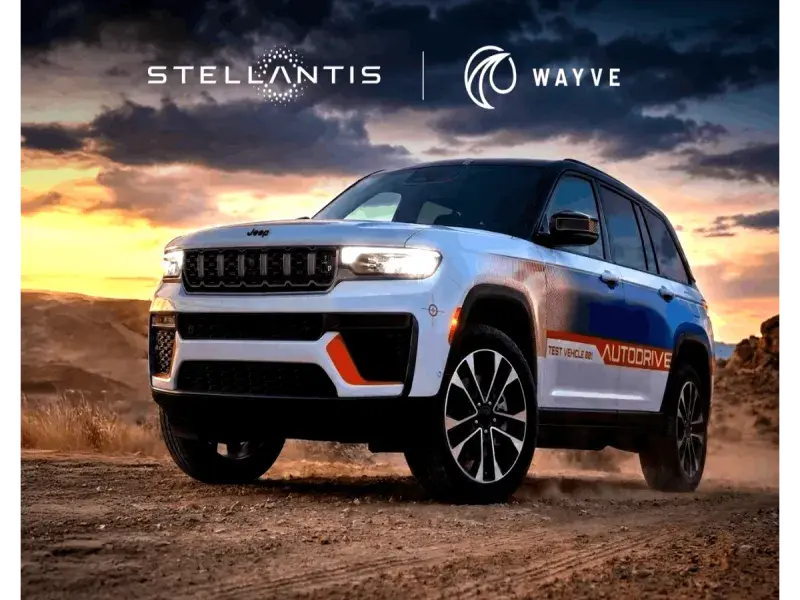
SHERIDAN, WYOMING – May 22, 2026 – The idea of letting your car handle traffic, stoplights, lane changes, and long highway drives without constantly touching the steering wheel is moving closer to everyday reality. Stellantis and Wayve have announced a major new partnership focused on bringing hands-free supervised driving technology to future vehicles across North America starting in 2028. The goal is ambitious: create a smoother, more human-like driving experience that works not only on highways, but also through busy urban streets and daily commutes.
The collaboration will integrate Wayve’s AI-powered driving system into Stellantis’ STLA AutoDrive platform, forming the backbone for a new generation of advanced driver-assistance features across multiple vehicle brands.
What “Hands-Free Door-to-Door Driving” Actually Means
Unlike many current systems that work mainly on highways, the planned technology is designed to support supervised Level 2++ automated driving in both city and highway environments. That means drivers will still need to remain alert and ready to take control, but the vehicle could handle far more of the driving workload during normal trips.
The “door-to-door” concept is especially important because urban driving remains one of the biggest challenges for automated systems. Navigating intersections, pedestrians, cyclists, construction zones, and unpredictable traffic patterns requires far more advanced decision-making than simple highway lane-keeping.
Stellantis says the partnership is aimed at making the experience feel intuitive, natural, and less stressful for everyday drivers.
AI Is Becoming the New Engine of the Modern Car
Wayve approaches automated driving differently from many traditional systems. Instead of relying heavily on detailed pre-mapped roads, the company focuses on AI models that learn from real-world driving behavior and adapt to different environments.
That flexibility matters because it could allow the system to scale across different cities, countries, and vehicle types more efficiently over time.
According to Wayve CEO Alex Kendall, the companies were already able to integrate an early prototype into Stellantis vehicles in less than two months. That rapid integration speed highlights how automakers are increasingly shifting toward software-first vehicle development strategies.
For consumers, this could eventually mean smarter driving assistance that improves continuously through updates and real-world learning rather than remaining static after purchase.
Why This Matters for Everyday Drivers
Advanced driver-assistance systems are quickly becoming one of the most competitive areas in the automotive industry. Buyers are no longer looking only at horsepower or fuel economy. Convenience, stress reduction, digital intelligence, and safety technology now play a major role in purchasing decisions.
The new system is expected to support:
- Hands-free driving on highways
- Automated support in urban traffic
- More natural lane changes and steering behavior
- Continuous software improvement over time
Stellantis also says the technology is designed with scalability in mind, meaning it could eventually appear across multiple brands within the company’s portfolio, including Jeep, Peugeot, Opel, Dodge, Chrysler, Alfa Romeo, Fiat, and others.
How This Compares to Other Automated Driving Systems
Many existing driver-assistance systems still operate within fairly strict limitations, often requiring highly mapped roads or restricting use to certain highway conditions. Wayve’s AI-first strategy aims to create a more adaptable system capable of learning from broader driving situations.
That does not mean fully autonomous driving is arriving immediately. The upcoming launch is still classified as supervised automation, where the driver remains responsible for the vehicle. However, the technology points toward a future where automated systems gradually handle more complex situations with greater confidence.
The partnership also reflects a broader industry trend: automakers increasingly partnering with AI companies rather than building every autonomous-driving component internally.
Mini FAQ
Q: Will drivers still need to pay attention?
A: Yes. The planned system is supervised Level 2++ automation, meaning drivers must remain ready to take over.
Q: When is the technology expected to launch?
A: Stellantis is targeting a North American rollout beginning in 2028.
Q: Will this only work on highways?
A: No. The companies say the system is designed for both urban and highway driving.
Q: Could this expand globally later?
A: Yes. The platform is designed to scale across markets and vehicle types over time.
As cars continue evolving into software-driven mobility platforms, partnerships like this could shape how future commuting feels on a daily basis. For many drivers, the appeal may not simply be automation itself, but reducing fatigue, improving convenience, and making long or stressful trips feel more manageable.