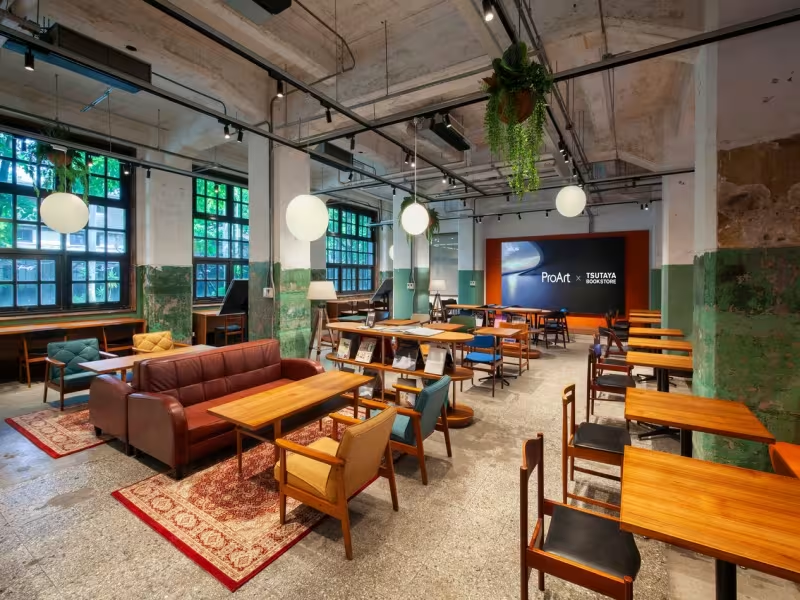
SHERIDAN, WYOMING – May 14, 2026 – ASUS has partnered with TSUTAYA BOOKSTORE to turn a literary space into something that looks more like a gallery, cultural venue, and creative studio rolled into one. The centerpiece is the ProArt Cinema PQ09U, a 162-inch 4K UHD microLED display installed in TSUTAYA's newly opened hybrid retail space in Taipei — and it's being used not to sell products, but to deepen the experience of reading, art, and ideas. At a moment when bookstores everywhere are rethinking what they're actually for, this collaboration offers a genuinely interesting answer: a place where a book recommendation might come alongside an immersive visual art experience on a screen bigger than most living room walls.
What TSUTAYA Actually Is
If you haven't encountered TSUTAYA outside of Japan or Taiwan, the concept is worth understanding. It's not a traditional bookstore. TSUTAYA was built around the idea that adults want curated cultural experiences, not just shelves to browse. In-store concierges — actual humans with genuine expertise — help guide everything from book selection to themed events. Spaces are designed to feel relaxed and stimulating rather than transactional. The new hybrid location takes that philosophy a step further by integrating digital media directly into the environment.
What the Screen Actually Does
The ProArt Cinema PQ09U isn't functioning as a giant advertisement or a digital menu board. Inside the TSUTAYA space, it serves as a visual platform for digital art exhibitions, curated storytelling that accompanies themed book displays, and cultural programming including talks and creator-led sessions. The screen's high color accuracy — the same specification that makes it a tool for professional video editors and photographers — means the art and imagery displayed on it are rendered with real fidelity, not the washed-out approximation you'd get from a typical commercial display.
At 162 inches across, the scale transforms how audiences engage with visual content. A photograph becomes architectural. A short film becomes cinematic. The connection between a visual work and the books it accompanies becomes harder to ignore.
Why This Matters Beyond the Bookstore
The partnership points toward something broader in how cultural and retail spaces are evolving. Bookstores, museums, and cultural venues are increasingly being asked to justify physical presence in a world where content is available everywhere online. One answer is to offer experiences that screens at home simply cannot replicate — immersive scale, expert curation, and social context.
TSUTAYA's Chairman and General Manager for Taiwan, Kazuma Otsuka, framed it this way: the vision is a bookstore as a cultural experience hub, using display technology to create new intersections between knowledge, visual art, and lifestyle. That's a meaningful reframe — the display isn't decorating the space, it's becoming part of how the space thinks about itself.
The Technology Behind It
MicroLED is worth understanding if you haven't followed its development. Unlike OLED, it doesn't rely on organic compounds that can degrade over time. Unlike traditional LED walls, it achieves the kind of precise color reproduction and image uniformity that professionals require. For a space hosting digital art exhibitions, that distinction matters — artworks are displayed as their creators intended them to be seen, not approximated.
The ProArt Cinema PQ09U is ASUS's flagship large-format display solution, designed for professional creative environments. Deploying it in a bookstore rather than a broadcast studio or corporate headquarters is a deliberate statement about where pro-grade visual technology is heading.
What Comes Next
Both companies have indicated plans to expand collaborative programming following the store opening — curated events combining visual media, literature, and creative dialogue. The goal, as described, is to bring new creative energy to urban communities through the space. Whether that model travels beyond Taipei remains to be seen, but the template is clear: physical cultural spaces that use technology to deepen experience rather than replace it.
3 Reasons This Is Worth Watching
- Bookstores and cultural venues globally are searching for a physical experience that streaming and e-readers can't replicate — this is one concrete answer
- MicroLED at this scale is moving out of broadcast and corporate settings into public cultural spaces, making professional-grade visual fidelity accessible to everyday audiences
- The curation model — pairing expert human guidance with immersive visual technology — could influence how libraries, galleries, and hybrid retail spaces think about their role